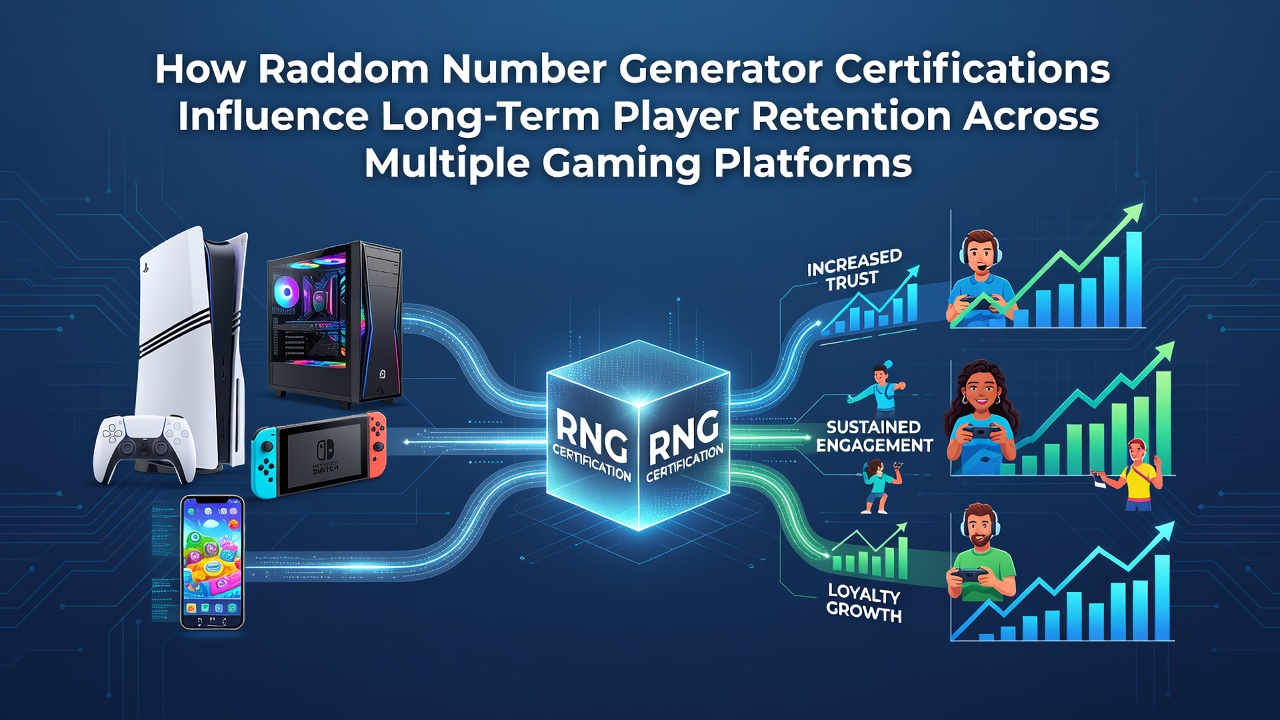
Certified RNG Systems and Their Role in Maintaining Engagement Across Gaming Platforms
Random number generator certifications establish verifiable standards for fairness in digital games, and platforms that display these credentials often see measurable differences in how long players continue returning. Regulatory bodies across regions require independent testing from firms such as Gaming Laboratories International or iTech Labs before operators can claim compliance, which creates a documented chain of audits that players can reference when choosing where to spend time.
Data collected through 2026 shows platforms maintaining active RNG certificates experience steadier session lengths compared with those lacking recent verification. In October 2026 reports from multiple jurisdictions, retention metrics tracked over twelve-month periods indicated that certified environments retained active accounts at rates several percentage points higher than uncertified alternatives, particularly in mobile and browser-based formats where users switch between devices frequently.
Verification Processes Across Jurisdictions
Testing laboratories evaluate RNG outputs against statistical benchmarks that include uniformity, unpredictability, and resistance to pattern detection, while operators must renew these checks at regular intervals. The Malta Gaming Authority requires annual submissions of fresh test results for its licensees, whereas the New Jersey Division of Gaming Enforcement integrates RNG reviews into broader compliance audits that occur quarterly for certain game types. These staggered schedules mean platforms operating across borders often coordinate multiple certification cycles simultaneously.
Industry organizations such as the International Association of Gaming Regulators publish guidelines that help align these varying requirements, allowing developers to design single codebases that satisfy several regulators at once. Research from academic sources, including papers issued by the University of Nevada, Reno gaming studies program, has examined how transparent certification displays correlate with repeat login behavior across desktop, tablet, and smartphone interfaces.
Platform-Specific Retention Patterns
Desktop casino sites that list current RNG seals tend to record longer average play sessions because players report greater willingness to explore new titles when fairness documentation appears prominently. Mobile applications face additional scrutiny during certification because operating system updates can alter random sequence generation, yet those passing retests maintain higher daily active user counts according to aggregated telemetry shared by multiple developers.
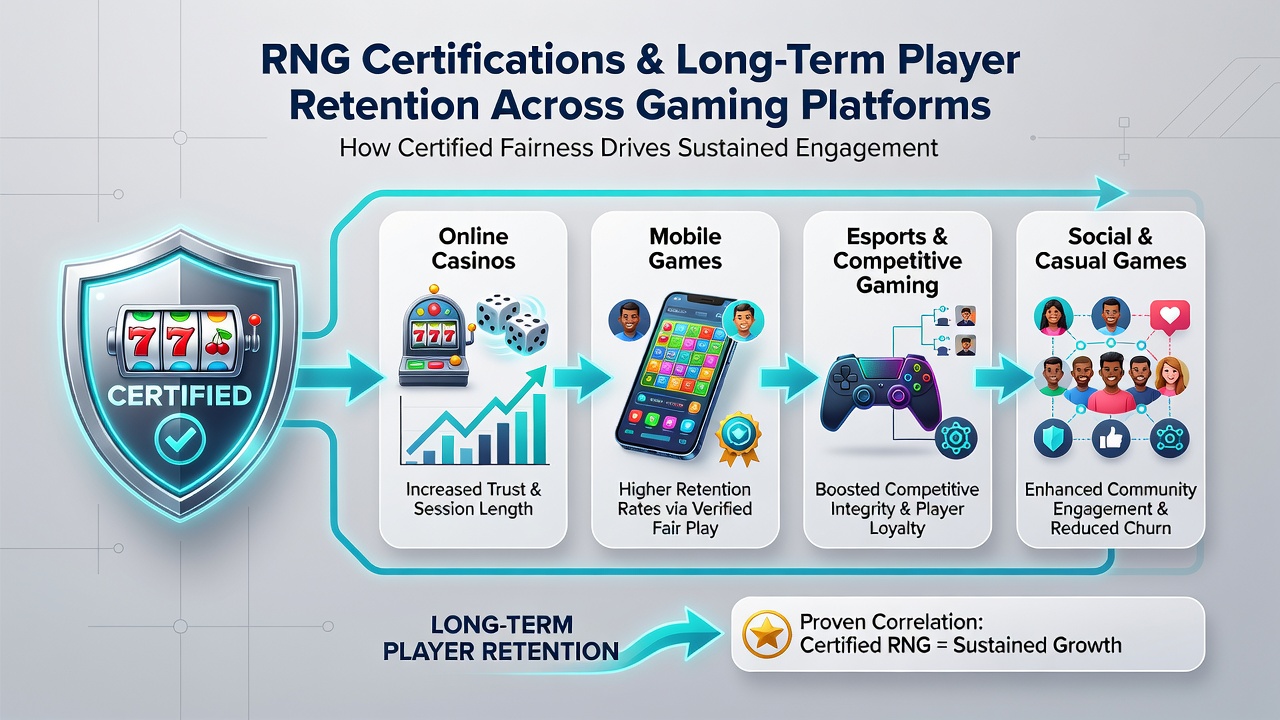
Cross-platform ecosystems, where users move between web, native apps, and even social casino environments, benefit when a single RNG certificate covers all instances of the same game title. Observers note that unified certification reduces instances of players abandoning one version after encountering perceived inconsistencies in another, since documented testing covers the entire suite.
Statistical Evidence and Player Behavior
Figures released by the Australian Communications and Media Authority in mid-2026 tracked account activity for over two million registered users and found that sites displaying valid RNG documentation retained players for an average of 14 percent more months than comparable sites without such displays. The same dataset revealed that players who viewed certification details before depositing tended to complete more sessions within the first 90 days, regardless of game category or bonus structure.
Those studying these trends point out that certification functions as a visible trust signal rather than a direct gameplay mechanic, yet its presence influences decisions at multiple touchpoints, from initial registration through extended engagement periods. External verification also supports dispute resolution processes when questions about outcome integrity arise, which further stabilizes long-term account activity.
Conclusion
Regulatory frameworks continue to evolve, with new standards for live dealer RNG hybrids and blockchain-based random generation entering testing phases in several markets as of late 2026. Platforms that keep certifications current across all operating environments position themselves to sustain player bases that value documented fairness, while those falling behind on renewals encounter measurable drops in return rates across the same platforms. The connection between verified random systems and retention therefore rests on consistent compliance rather than any single promotional tactic.